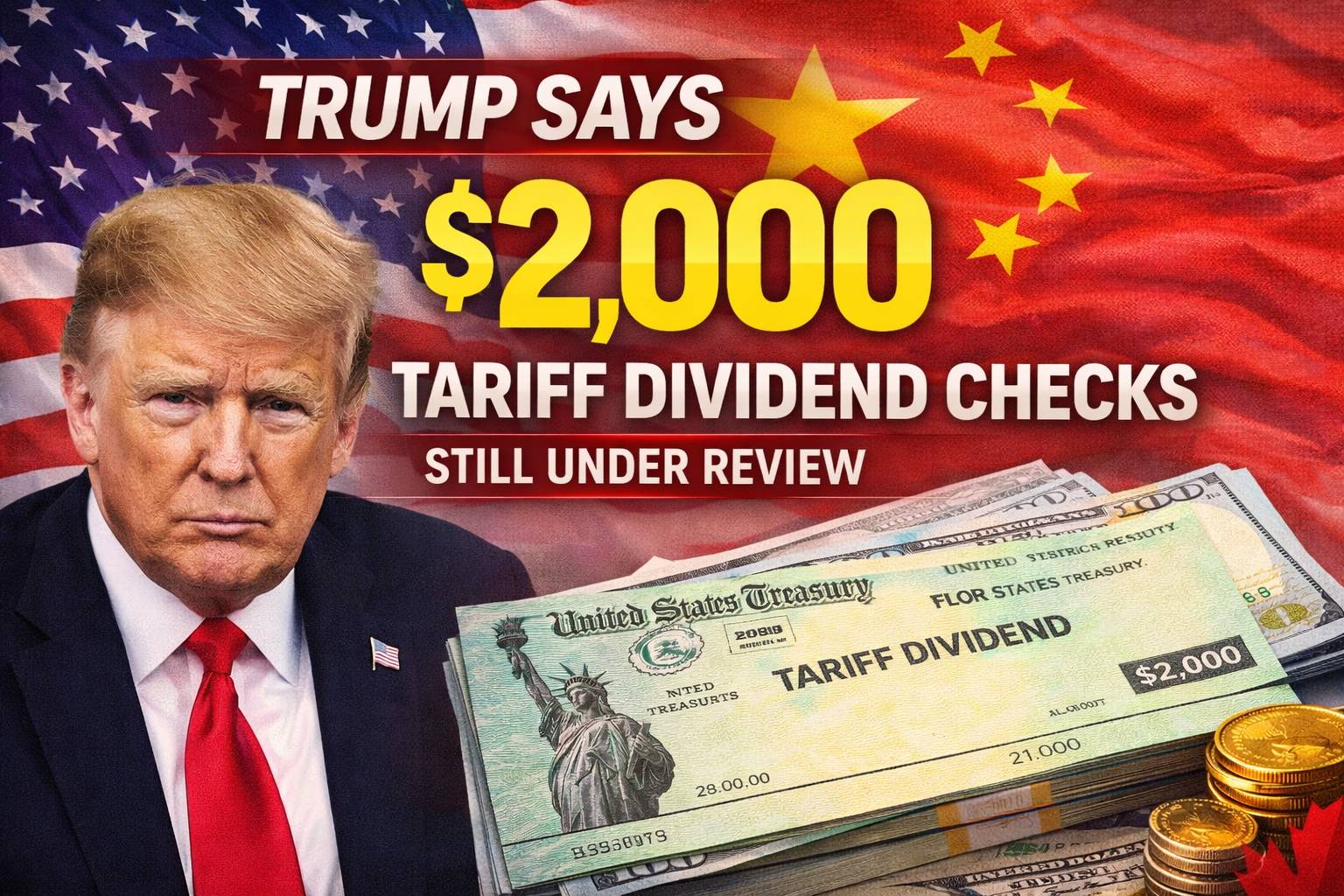
Millions of Americans are awaiting clarity on a proposed $2,000 stimulus check floated by President Donald Trump. The idea, described as a potential “tariff dividend,” would use revenue collected from U.S. tariffs to fund one-time payments for certain households.
However, there is no official plan approved by Congress, and the White House has confirmed that no final decision has been made. In recent interviews, Trump said he is “looking at it very seriously,” but stopped short of guaranteeing payments.
As of now, there is no confirmed payment date, no signed legislation, and no formal proposal passed by lawmakers.

What Is the Proposed $2,000 Tariff Dividend?
The proposal involves sending $2,000 one-time payments to low- and middle-income Americans, potentially funded by tariff revenue collected in 2025.
Trump has suggested the checks could be issued to individuals earning under $100,000 annually, though no official eligibility guidelines have been released.
In a February 4 interview with NBC Nightly News anchor Tom Llamas, Trump said he “may make the commitment,” but has not done so yet.

At this stage:
- No legislation has been introduced or passed
- No federal agency has issued payment guidance
- No eligibility portal is open
Would Congress Need to Approve the Checks?
Yes. According to economic policy officials, congressional approval would be required before payments could be issued.
Kevin Hassett, Director of the National Economic Council, stated that a proposal would need to be presented to Congress in the coming year.

Although Trump has suggested he might not need congressional approval, budget experts and constitutional scholars note that federal spending of this scale requires legislative authorization.
Without a passed bill, the checks cannot legally be distributed.
How Much Would the $2,000 Checks Cost?
Tax policy analysts estimate that sending $2,000 payments nationwide would cost between:
Read Also:
 $500 Canada Housing Support Confirmed for Eligible Tenants: Income Rules and Deposit Details
- $279.8 billion and $606.8 billion, depending on eligibility scope
For comparison, U.S. Customs tariff collections in 2025 totaled $216.7 billion, which is below the projected cost of the proposed checks.
Experts from the Tax Foundation and other fiscal research groups have warned that issuing payments at this scale could increase federal spending and widen the budget deficit, rather than reduce it.
Trump’s Comments on Military and Farm Payments
In addition to the proposed $2,000 stimulus, Trump referenced other payments linked to tariff revenue.

He highlighted a $1,776 “Warrior Dividend” payment to active-duty U.S. military members. However, those payments were already authorized by Congress as part of a housing subsidy measure within broader legislation.
Trump has also announced:
- A $12 billion aid package for farmers
- Proposals to use tariff revenue to cut income taxes
- Plans to reduce the federal deficit using trade-related income
These initiatives are separate from the proposed $2,000 checks.

Timeline: When Could Payments Arrive?
When asked about timing, Trump said payments could come “toward the end of the year.”
However, without:
- Congressional approval
- Signed legislation
- Official IRS or Treasury guidance
there is no confirmed timeline.

If a bill were introduced and passed, implementation could take several months for agencies like the IRS and Treasury to process and distribute payments.
Key Points Americans Should Understand
Before making financial decisions based on the proposal, it’s important to note:
- The $2,000 check is not guaranteed
- No law has been passed
- No eligibility criteria are finalized
- No payment date is confirmed
- Funding sources may not cover total program costs
Americans should rely only on official announcements from the White House, Congress, and federal agencies.

What Should Households Do Now?
At this time:
- No action is required
- No application process exists
- No registration portal is open
Avoid unofficial websites claiming to process stimulus payments. Any legitimate federal payment program would be announced through official government channels and administered by agencies such as the IRS or Treasury.
Broader Economic Context
The debate around the $2,000 tariff dividend reflects ongoing discussions about:

- Federal spending levels
- Trade policy revenue
- Budget deficit management
- Inflation and household cost pressures
While tariff revenue has increased, fiscal experts caution that large-scale direct payments require careful budget balancing to avoid long-term debt growth.
Frequently Asked Questions (FAQ)
Are the $2,000 stimulus checks confirmed?
No. The proposal is under consideration, but no final decision or law has been passed.
Who would qualify if approved?
Trump has suggested individuals earning under $100,000, but no official eligibility rules exist yet.

When would payments arrive?
Trump mentioned “toward the end of the year,” but no timeline is confirmed.
Does Congress need to approve the checks?
Yes. Federal spending at this level requires congressional authorization.
How would the checks be funded?
Trump has proposed using tariff revenue collected in 2025.

Would the checks increase the deficit?
Tax experts say the program could raise federal spending beyond current tariff revenue levels.
Is there an application process?
No. No official payment system or portal exists at this time.