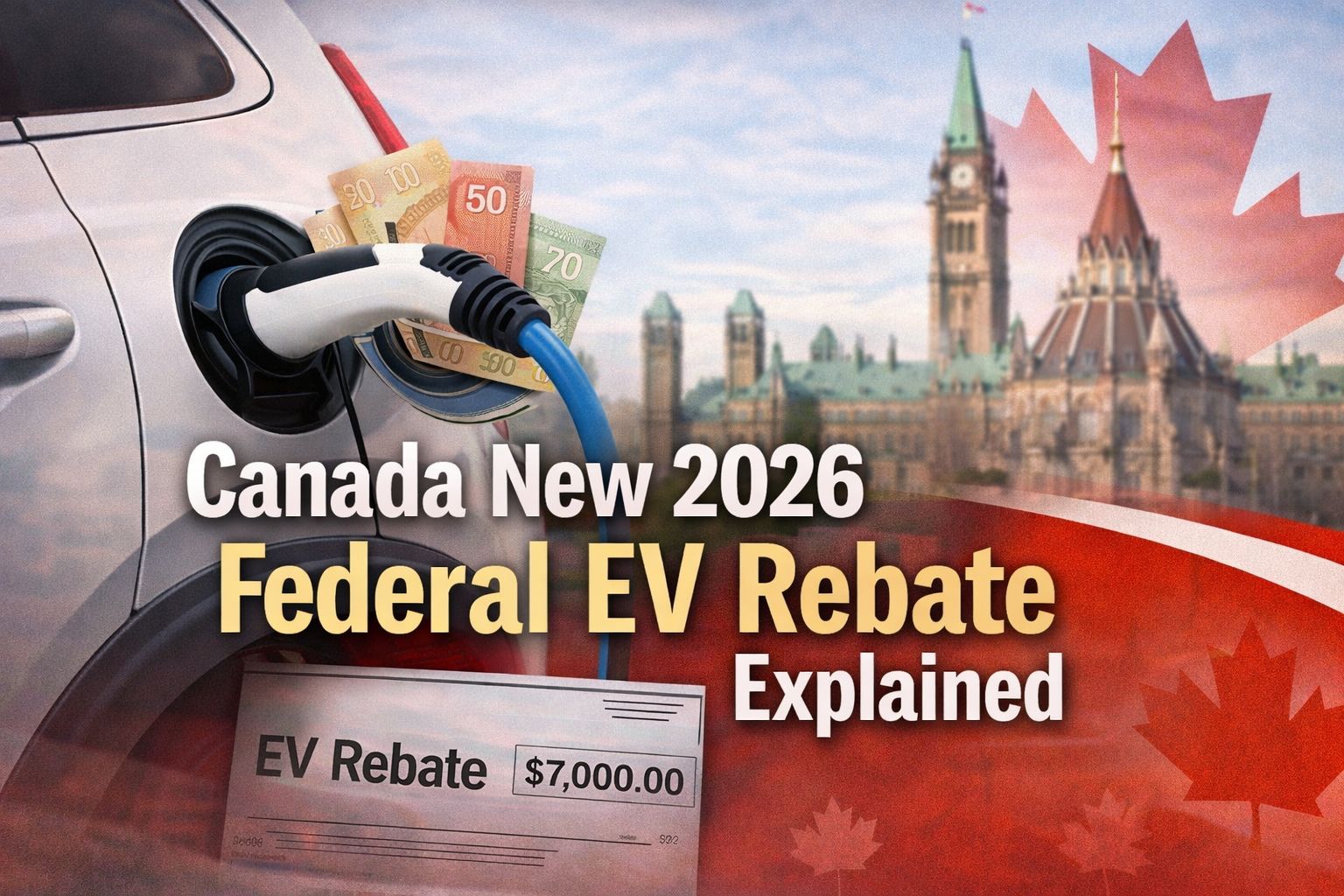
The federal government has confirmed that new consumer rebates of up to $5,000 will be available beginning February 16, 2026, for eligible electric and plug-in hybrid vehicles purchased or leased in Canada.
The incentives will be administered at the dealership level as point-of-sale rebates, reducing the upfront purchase price without requiring a separate reimbursement application. The program was announced in Ottawa by Steve MacKinnon and forms part of a broader electric vehicle strategy introduced by Prime Minister Mark Carney.
The measure is officially confirmed and applies to qualifying vehicles sold on or after Feb. 16, 2026.
Read Also:
 $500 Canada Housing Support Confirmed for Eligible Tenants: Income Rules and Deposit Details
How Much Is the Federal EV Rebate?
The incentive amount depends on the type of vehicle purchased or leased:
- Up to $5,000 for new battery electric vehicles (BEVs)
- Up to $5,000 for fuel cell electric vehicles (FCEVs)
- Up to $2,500 for eligible plug-in hybrid electric vehicles (PHEVs)
To qualify for the full $5,000, the vehicle must be powered solely by an onboard battery or hydrogen fuel cell system.
According to Natural Resources Canada, plug-in hybrids use both gasoline and an electric motor, with batteries that can be charged externally. Because they still rely partly on gasoline, they qualify for a lower rebate.

Price Cap Rules: $50,000 Limit With One Key Exception
The incentive applies to vehicles priced up to $50,000.
However, there is an important exception:
If the vehicle is manufactured in Canada, the price cap does not apply.
This provision is designed to support domestic auto production as part of the federal government’s industrial strategy.

What Vehicles Are Eligible?
Eligible vehicles must be:
- New (not used)
- Purchased or leased on or after Feb. 16, 2026
- Battery electric, fuel cell electric, or qualifying plug-in hybrid
- Purchased from a participating dealership
Used vehicles are not included under the newly announced rebate framework.
Why the Government Introduced the Incentive
The rebate program is part of a five-point automotive strategy unveiled by Prime Minister Carney aimed at:
- Reducing greenhouse gas emissions
- Increasing EV adoption nationwide
- Strengthening Canada’s automotive sector
- Countering economic pressure from U.S. trade tariffs
- Expanding charging infrastructure
Recent data from Statistics Canada shows EV sales have slowed in recent years. Surveys indicate higher upfront costs and limited charging infrastructure remain key barriers for consumers.
Charging Infrastructure Expansion Confirmed
To address range anxiety and infrastructure gaps, the government is expanding its charging network through the Zero Emission Vehicle Infrastructure Program.
Energy and Natural Resources Minister Tim Hodgson confirmed:

- $84 million invested
- 122 infrastructure projects approved
- More than 8,000 new charging stations planned nationwide
The funding supports installations in urban, rural, and remote regions across Canada.
How the Rebate Works at the Dealership
Unlike previous federal incentive programs that required post-purchase applications, the new structure simplifies the process.
At participating dealerships:

- The rebate will be deducted directly from the purchase price
- Buyers will not need to submit paperwork after the sale
- The incentive is applied during the transaction
Consumers should confirm eligibility with dealerships before signing contracts.
What This Means for Canadian Households
For eligible buyers, the program reduces upfront EV costs by thousands of dollars. Combined with provincial incentives in some jurisdictions, total savings could be significantly higher depending on location.
However, buyers should consider:

- Insurance costs
- Home charging installation expenses
- Availability of charging stations in their region
- Provincial rebate stacking rules
The rebate does not affect eligibility for federal benefits such as CPP, OAS, or GST/HST credits.
What Canadians Should Do Next
If you are considering purchasing an electric vehicle:
- Confirm vehicle eligibility with your dealership.
- Verify the purchase date is on or after Feb. 16, 2026.
- Check for additional provincial rebates.
- Review total cost of ownership, including charging setup.
No online federal application is required if purchasing through a participating dealership.

Frequently Asked Questions
When does the EV rebate start?
The rebate applies to eligible vehicles purchased or leased on or after February 16, 2026.
How much can I receive?
Up to $5,000 for battery or fuel cell electric vehicles and up to $2,500 for qualifying plug-in hybrids.
Is this officially confirmed?
Yes. The federal government confirmed the incentive through Transport Canada announcements.
Read Also:
 Service Canada Payment Cuts Confirmed: Seniors, Families and Disability Recipients Impacted
Do I need to apply separately?
No. The rebate is processed at the dealership as a point-of-sale incentive.
Is there a price cap?
Yes. The vehicle must cost $50,000 or less, unless it is manufactured in Canada.
Will this affect my CPP or OAS payments?
No. The rebate does not impact federal benefit eligibility.